O.C.O Technology expands Carbon Capture Technology into Europe with Biscay Eco Aggregates
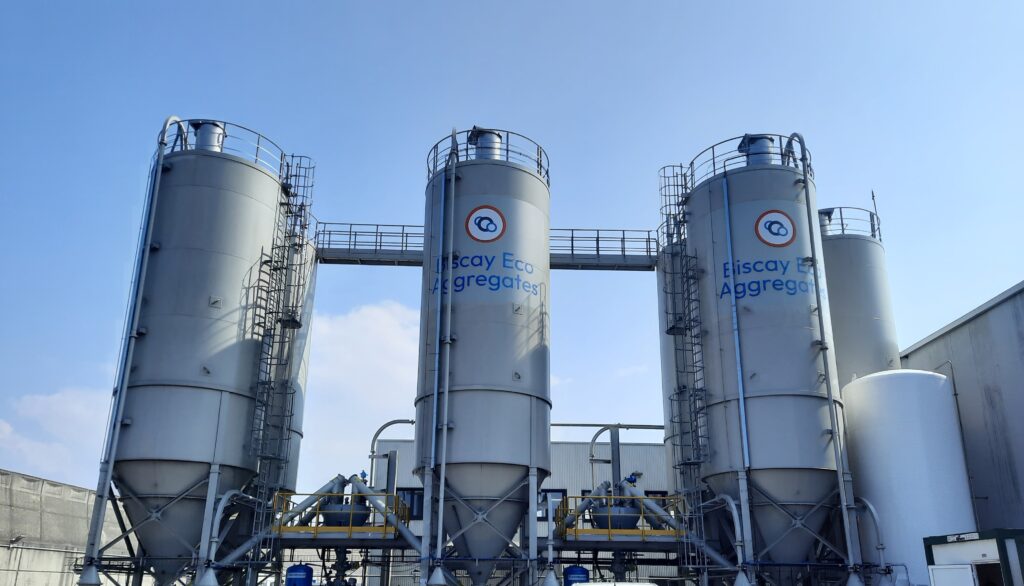
Biscay Eco Aggregates (B.E.A) has begun manufacturing at its state-of-the-art facility located at the Port of Bilbao in Spain, marking an important milestone in the expansion of O.C.O’s pioneering carbon capture and utilisation (CCU) technology within Europe.
This transformative project, co-funded by the European Commission’s 2020 Innovation Fund is delivered in partnership with Petronor and highlights the power of international collaboration in accelerating decarbonisation and circular economy innovation.
The joint venture project represents a €20 million investment. Petronor holds a 75% stake, while O.C.O holds the remaining 25%. The project will also create 20 new jobs in the Port of Bilbao.
The Biscay plant integrates O.C.O’s globally recognised Accelerated Carbonation Technology (ACT), a process that permanently captures CO₂ and transforms thermal residues (APCr) into high quality, sustainable aggregates, marketed in Spain as Eco aggregate.
These Eco aggregates can be used in concrete, precast construction products and a wide range of building applications, providing a low carbon alternative to traditional construction materials.
Turning Waste and Emissions into Valuable Resources
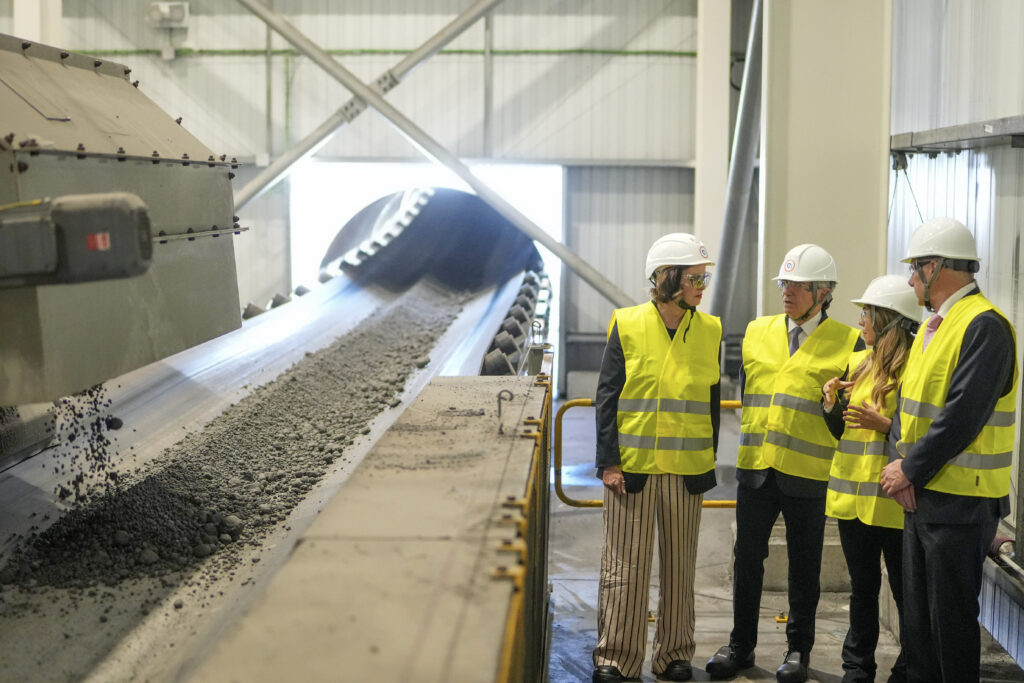
At the heart of B.E.A’s mission is the utilisation of thermal waste (APCr) that would typically go to landfill into a stable, sustainable construction resource.
During this process, industrial CO₂ captured from Petronor’s refinery is permanently mineralised, embedding carbon into the aggregate produced. This not only reduces emissions into the atmosphere but also decreases reliance on natural aggregate extraction, easing pressure on global resources. The mineralisation plant has the capacity to capture up to 6,000 tonnes of CO2 a year within its aggregate, and the project will support economic growth in the Basque region by providing local jobs and further strengthening Spain’s sustainable industrial innovation capabilities.
Steve Greig, CEO of O.C.O, commented: “We are the leading recycler of APCr in the UK, treating some 250,000 tonnes pa – about 35% of the UK Market. This is the first full scale deployment of one of our facilities in Europe and we are delighted to be partnering with Petronor who share the same values and vision as O.C.O. This is the first of its kind in Europe. Whilst we have focused on treating APCr, our technology can be used in a variety of applications, and we are excited about the prospect of future facilities.”
Why International Partnerships Matter for O.C.O’s Global Growth
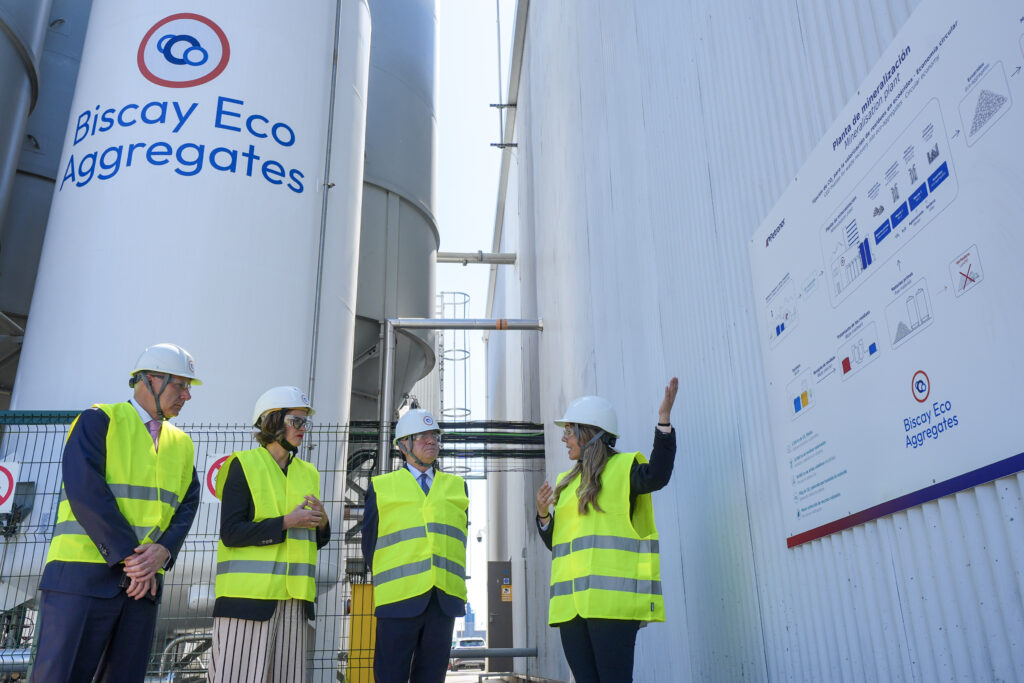
The Biscay Eco Aggregates project is a testament to the strategic importance of O.C.O partnering with international leaders to scale sustainable technologies worldwide.
Through collaboration with Petronor, O.C.O can accelerate the global deployment of its technology, support international climate goals, and create new opportunities for decarbonised construction materials. By combining expertise across borders, the partnership further strengthens technical innovation and promotes shared learning.
According to José Ignacio Zudaire, Petronor CEO, ‘This plant is, undoubtedly, a clear example of a development model based on partnership, commitment to technology and industrial momentum. The project is based on sustainability and is an example of the circular economy at 100%; it is also proof of Bizkaia’s appeal for setting up new projects, thanks to the partnership of the province’s trail-blazing companies and international firms. Rolling out the project requires a robust ecosystem: public policies that drive such investments; established waste treatment companies that are able to supply the necessary raw material; along with an environment and market committed to sustainability and ready to endorse this new pathway that we are launching today’.
Aitor Arzuaga, Director of New Transformation Projects at Petronor explained “Our decarbonisation strategy involves undertaking a second major transformation, with the circular economy as one of its pillars. This project fits perfectly with that vision, as it enables us to convert waste into a raw material, an eco-aggregate. This means that, on the one hand, we avoid the problem of APCr disposal and CO₂ emissions and, on the other, we reduce the need to use more natural aggregate, along with the impact that this entails.”